Wednesday, 31 May 2023

Understanding the Difference Between Shear Walls and Cores in Building Structures

When it comes to constructing tall buildings, ensuring structural stability is of utmost importance. Two crucial elements that play a significant role in providing stability against lateral loads, such as winds and earthquakes, are shear walls and cores. While they serve a similar purpose, there are distinct differences between the two. In this blog post, we will explore these differences and understand the unique functions they perform.


Shear Walls: Resistance to Lateral Loads

Shear walls primarily function to resist lateral loads caused by winds and earthquakes. They are commonly used in tall buildings and play a critical role in maintaining structural integrity. Shear walls are designed to bear moments from a specific direction, aligning with their placement in the building. However, they may offer relatively less resistance against moments resulting from earthquakes compared to cores.


Cores: Stronghold against Lateral Loads

Similar to shear walls, cores also provide resistance to lateral loads, but they are known for their enhanced strength. Cores are typically utilized in tall buildings and serve as a robust central structure. They can withstand torque from both directions, offering superior stability. Additionally, cores bear the vertical loads imposed by elevators and stairs, further contributing to the overall structural integrity of the building.In addition to their primary function of resisting lateral loads, cores take on additional responsibilities. They provide support for elevators and stairs, ensuring their safe and efficient operation within the building. Moreover, cores exhibit higher resilience against stresses caused by seismic activity, making them a crucial component in earthquake-prone regions.


In summary, shear walls and cores are integral components of tall building structures, both serving to resist lateral loads. While shear walls bear moments from one direction, cores are designed to withstand torque from both directions. Cores also shoulder the loads of elevators and stairs, providing added stability. Understanding these differences is vital for architects, engineers, and construction professionals to ensure the structural integrity and safety of buildings in various environmental conditions.

By incorporating well-designed shear walls and cores, builders can create structures that not only withstand external forces but also provide a safe and secure environment for occupants. 

Labels: , , , , , ,

What are the Geo-technical investigations?How Geo-technical investigations create better projects?


Introduction:

When embarking on a construction project, whether it's a towering skyscraper or a humble residential building, there's one crucial aspect that lays the foundation for success: geotechnical investigations. These investigations delve deep into the secrets hidden beneath the earth's surface, providing essential information about soil and rock formations. By understanding the physical properties of the site, engineers and architects can design structures that are not only safe but also efficient and cost-effective. Let's dig deeper and explore how geotechnical investigations shape the path to better construction projects.


Unveiling the Unknown: What Are Geotechnical Investigations?

Geotechnical investigations are meticulous studies conducted to analyze the physical properties of soil and rock formations. By determining the suitability of a site for construction, these investigations play a pivotal role in the design of foundations, retaining structures, and other crucial elements. In essence, geotechnical investigations are the first step towards uncovering the hidden potential and limitations of a project site.


Getting to the Bottom: Site Investigation Methods


Site investigation forms the backbone of geotechnical investigations. It involves gathering vital data about soil and rock formations, which aids in assessing the site's suitability for construction. Various techniques, such as sampling and testing, are employed to analyze soil properties. These investigations provide valuable insights into factors like soil type, density, moisture content, as well as the strength and stiffness of the soil.

But let's not forget the rocks! Geotechnical investigations also analyze rock properties, including strength, durability, and weathering. Through these investigations, engineers gain a comprehensive understanding of the subsurface conditions, enabling them to make informed decisions and mitigate potential risks.

Delving Deeper: Innovative Investigation Methods

In addition to traditional sampling and testing, geotechnical investigations embrace innovative techniques to enhance the accuracy and efficiency of the process. Geophysical methods, like mixed surveys and ground-penetrating radar, help gather detailed data about subsurface conditions. By revealing the depth and thickness of soil and rock formations, as well as the presence of voids or anomalies, these methods provide invaluable insights for project planning and design.

Building on Solid Ground: Applications of Geotechnical Investigations

The true value of geotechnical investigations lies in their practical applications. Armed with the knowledge gleaned from these investigations, engineers can design foundations that can bear the weight of the world, retaining structures that withstand the test of time, and analyze slope stability to ensure the safety of a project. Moreover, ground improvement techniques, such as soil stabilization, grouting, and the use of geosynthetics, allow engineers to optimize soil and rock properties, further bolstering the integrity of the construction.

Conclusion: Unleashing the Potential

Geotechnical investigations are the unsung heroes of construction projects. By uncovering the secrets beneath the ground, they empower engineers and architects to create better, safer, and more cost-effective structures. These investigations ensure that foundations are solid, retaining walls stand tall, and slopes remain stable. They lay the groundwork for success, guiding construction projects towards a path of efficiency, safety, and innovation.


So, the next time you marvel at the towering structures that define our cities, remember the invisible heroes that made it all possible – geotechnical investigations, unearthing the potential beneath our feet.

Labels: , , ,

Monday, 29 May 2023

Download BIM Software | System requirement | List of BIM Software

Building Information Modeling (BIM) has revolutionized the way architectural, engineering, and construction professionals collaborate and manage projects. BIM software offers powerful tools and capabilities to create, visualize, and analyze 3D digital models of buildings and infrastructure.

In this article, we will explore a comprehensive list of BIM software options available in the market, along with their system requirements. Whether you're an architect, engineer, or construction manager, finding the right BIM software is essential to streamline your workflow, improve project efficiency, and enhance collaboration. Let's dive into the world of BIM software and discover the tools that can transform the way you design and construct buildings.

Here is a list of some popular BIM (Building Information Modeling) software

1. REVIT 2022 

Ways to access:

  • Purchase a full version (1-year access)- Click Here for more details.

  • Activate a trial version (30-day access)- Click Here for more details.

  • Install a Student version (1 year access) You can find more details here.

System Requirement :

The minimum system requirements for Revit 2022 are as follows -

  • Operating System: 64-bit Microsoft® Windows® 10 or Windows 11. See Autodesk's
  • Product Support Lifecycle for support information.
  • CPU Type: Intel® i-Series, Xeon®, AMD® Ryzen, Ryzen Threadripper PRO. 2.5GHz or Higher.
  • Memory: 8 GB RAM
  • Video Display Resolutions: 1280 x 1024 with true colour
  • Video Adapter: Display adapter capable of 24-bit colour
  • Disk Space: 30 GB free disk space

2. TWINMOTION - ARCHITECTURE

Ways to access:

  • Download twinmotion free for non-commercial use. Click Here for more details.

System Requirement :
  • Operating System: Windows 10 and 11, 64 bit
  • Graphic Card: 6 GB dedicated memory or card with benchmark score over 10000
  • CPU: CPU with a benchmark score of 2000 or higher
  • Memory: 16 GB RAM
  • Disk Space: 30 GB free disk space

3. ETABS - STRUCTURAL ANALYSIS

CSI
Ways to access:

  • Activate a trial version (30 day access). Click Here for more details.

System Requirement :
  • Operating System: Microsoft® Windows 8.1, 10, or 11
  • Graphic Card : Supporting 1024 by 768 resolution and 16 bits colours for standard (GDI+) graphics mode
  • CPU : Intel i5/i7, AMD Athlon X4/Ryzen, or better. A 64-bit CPU is required
  • Memory : 8 GB RAM
  • Disk Space : 6 GB to install the software. Additional space will be required for running and storing model files and analysis results, dependent upon the size of the models

4. NAVISWORKS 2022

Navisworks
Ways to access:

  • Purchase a full version (1-year access)- Click Here for more details.

  • Activate a trial version (30-day access)- Click Here for more details.

  • Install a Student version (1 year access) You can find more details here.

System Requirement :
  • Operating System : Microsoft® Windows® 10 (64-bit)
  • CPU Type : 3.0 GHz or faster processor
  • Memory : 2 GB RAM
  • Video Display Resolutions : 280 x 800 VGA display with true color (1920 x 1080 monitor and 32-bit video display adapter recommended)
  • Graphic Card : Direct3D 9® and OpenGL® capable graphics card with Shader Model 2 (minimum)
  • Disk Space : 15 GB free disk space for installation

5. BIM COLLAB ZOOM

BIM Collab Zoom

Ways to access:

  • Activate a trial version (30 day access). Click Here for more details.

System Requirement :
  • Operating system : Microsoft® Windows® 10 or 11
  • Internal memory : 16GB RAM or more (8GB minimum)
  • Mouse : A mouse with scroll wheel is highly recommended
  • Graphics : A dedicated video card with support for OpenGL 3.3 graphics

6. BIM INTEROPERABILITY TOOLS

Ways to access:

  • Download the tools for free from the Autodesk website. Click Here for more details.

System Requirement :
  • Operating System PC / Tablet : Windows 7 or newer
  • CPU Type : 2 GHz CPU
  • Internal Memory : 4 GB of free RAM
  • Graphics : GeForce GTX 1650 graphics card class or a suitable
  • Disk Space : 1GB of free hard disk space
  • For automatic updates Internet connection is required
  • PDF browser for viewing help files

7. BIM TRACK

Ways to access:

  • Activate a trial version. Click Here for more details. 

System Requirement:
  • Graphics : 2GB Graphics card (for 3D viewer only)
  • Operating System : Microsoft® Windows 8.1, Windows 10, Mac OS X 10.12, Android 7.0
  • WebGL compatible Browser (Mozilla Firefox 75+, Google Chrome 80+, Safari 13.1 (limited), Microsoft Edge 78+)
  • Internet Explorer is not supported
  •  High-speed Internet connection

8. DYNAMO

Ways to access:
  • Dynamo comes as a built-in component within revit. You do not need to install any

    additional software. 
System Requirement:
  • Operating System : Microsoft Windows 7 and above
  • CPU Type : Single- or Multi-Core Intel® Pentium®, Xeon®, or i-Series processor or AMD® equivalent with SSE2 technology
  • Memory : 4 GB RAM
  • Video Display 1,920 x 1,080 with true color or higher
  • Video Adapter Basic Graphics: Display adapter capable of 24-bit color
  • Disk Space : 1 GB and above free disk space
  • Pointing Device : MS-Mouse or compliant device
  • Connectivity : Internet connection for licence registration and prerequisite component download

9. GREEN BUILDING STUDIO

Ways to access:
  • Activate a trial version (30 day access). Click Here for more details.

System Requirement:
  • Operating System: 64-bit Microsoft® Windows® 10 or Windows 11. See Autodesk's Product Support Lifecycle for support information.
  • CPU Type: Intel® i-Series, Xeon®, AMD® Ryzen, Ryzen Threadripper PRO. 2.5GHz or Higher
  • Memory: 8 GB RAM

10. PRIMAVERA

Ways to access:
  • Activate a trial version (30 day access). Click Here for more details.

System Requirement:
  • CPU Type : Intel compatible CPU, 1 GHz or above
  • Internal Memory : 4GB of Memory or greater
  • Operating System : Microsoft Windows 7 Home Professional or Ultimate Software Requirements

11. CIVIL 3D

Ways to access:
  • Activate a trial version (30 day access). Click Here for more details.

System Requirement:
  • Operating System : 64-bit Microsoft® Windows® 10
  • Processor : 2.5–2.9 GHz processor
  • Memory : 8 GB
  • Display Resolution : 1920 x 1080 with True Color High Resolution
  • Display Card Basic: 1 GB GPU with 29 GB/s Bandwidth and DirectX 12 compliant
  • Disk Space : 16 GB
  • Pointing Device : MS-Mouse compliant
  • .NET Framework : .NET Framework Version 4.8 or later

12. BIM Vision

Ways to access:

  • Download the free viewer for private use. Click Here for more details.

System Requirement :
  • Operating System PC / Tablet : Windows 7 or newer
  • CPU Type : 2 GHz CPU
  • Internal Memory : 4 GB of free RAM
  • Graphics : GeForce GTX 1650 graphics card class or a suitable
  • Disk Space : 1GB of free hard disk space
  • For automatic updates Internet connection is required
  • PDF browser for viewing help files


Labels:

Sunday, 28 May 2023

BIM (Building Information Modelling)

INTRODUCTION TO BIM


BIM is an innovative methodology that leverages advanced technology to streamline the AEC industries, enabling more efficient planning, design, and construction processes while driving cost savings and shorter project timelines.

While there are different definitions of BIM, there is a common consensus that BIM is a Process for combining information and technology to create a digital representation of a project. It Integrates data from many sources and evolves in parallel with the real project across its entire timeline, including design, construction, and in-use operational information.

The term ‘Building’ within Building Information Modelling can be misleading. Rather than just referring to Buildings, the term should be thought of as the verb to build. The methodology can be applied to all types of construction projects, both vertical and linear including infrastructure projects and land surveying.


BENEFITS OF BIM IN CONSTRUCTION


Enhanced Collaboration


BIM promotes collaboration and communication among project stakeholders, including architects, engineers, contractors, and clients. It provides a shared platform where all parties can access and contribute to a centralized digital model, fostering effective teamwork and reducing information silos.

Improved Visualization and Design

BIM allows for the creation of 3D digital models that provide a realistic and immersive visualization of the building. This helps stakeholders better understand the design intent, identify design issues, and make informed decisions before construction begins.

Clash Detection and Risk Mitigation:


BIM enables clash detection, where potential clashes or conflicts between building elements are identified and resolved virtually before construction. This helps minimize on-site clashes, rework, and costly delays, reducing project risks and improving overall construction quality.

Accurate Quantity Takeoffs and Cost Estimation


BIM models contain detailed information about building components, quantities, and specifications. This data can be used for accurate quantity takeoffs and cost estimation, improving cost control, and reducing material waste.

Efficient Construction Sequencing and Planning

BIM allows for the simulation and optimization of construction sequencing and logistics. By visualizing the construction process in a digital environment, project teams can identify potential bottlenecks, optimize workflows, and improve construction efficiency.

Improved Construction Management

BIM supports construction management activities, such as progress tracking, resource allocation, and coordination of subcontractors. Real-time updates to the BIM model help monitor construction progress, manage timelines, and ensure project milestones are met.

Streamlined Facility Management and Maintenance

BIM data can be leveraged for facility management and maintenance throughout the building's lifecycle. It provides an accurate record of building components, systems, and maintenance schedules, facilitating efficient operation, maintenance, and renovations.

Enhanced Sustainability and Energy Efficiency

BIM enables the analysis and simulation of building performance, including energy consumption, daylighting, and thermal efficiency. This helps optimize design decisions to achieve higher sustainability standards and energy-efficient buildings.

Improved Communication with Clients

BIM models can be presented to clients in a visually appealing and interactive manner, allowing them to better visualize the project and make informed decisions. This improves client engagement, satisfaction, and overall project outcomes.

Integration with Advanced Technologies

BIM serves as a foundation for integrating advanced technologies such as virtual reality, augmented reality, and artificial intelligence. These technologies enhance project visualization, construction simulations, and automation, further improving efficiency and productivity.

These are just some of the many benefits of implementing BIM in construction projects. The adoption of BIM has transformed the industry by streamlining processes, improving collaboration, and delivering higher-quality buildings.

BIM SOFTWARES

When considering BIM software options, it's essential to compare different platforms based on their features, capabilities, and suitability for your specific project requirements. Here is a general comparison of popular BIM software:

Autodesk Revit:

  • Widely used and highly regarded BIM software
  • Known for its intuitive interface and user-friendly design tools
  • Widely used and highly regarded BIM software
  • Offers comprehensive tools for architectural, structural, and MEP (mechanical, electrical, and plumbing) design
  • Well-suited for medium to large-scale projects
  • Offers a complete BIM workflow for architects and designers
  • Includes features like intelligent objects, parametric modeling, and real-time rendering
  • Provides seamless collaboration and integration with BIMcloud for team collaboration
  • Suitable for projects of varying sizes, including residential, commercial, and complex structures

·    GRAPHISOFT ArchiCAD:

  • Known for its intuitive interface and user-friendly design tools
  • Offers a complete BIM workflow for architects and designers
  • Includes features like intelligent objects, parametric modeling, and real-time rendering
  • Provides seamless collaboration and integration with BIMcloud for team collaboration
  • Suitable for projects of varying sizes, including residential, commercial, and complex structures

Tekla Structures:

  • Specialized BIM software for structural engineering and detailing
  • Enables accurate 3D modeling, structural analysis, and detailing of steel and concrete structures
  • Supports clash detection, quantity takeoff, and construction sequencing
  • Integrates with Tekla BIMsight for collaboration and model coordination
  • Well-suited for projects in the construction, industrial, and infrastructure sectors.

Twinmotion

  • Twinmotion is a real-time visualization and rendering software for architectural and urban planning projects
  • It allows architects and designers to create immersive, high-quality visualizations and animations of their BIM models
  • With its intuitive interface and extensive library of objects, materials, and environments, Twinmotion facilitates quick and easy creation of stunning architectural visualizations
  • It supports direct synchronization with popular BIM software, enabling seamless integration and visualization of BIM models.

 ETABS

  • ETABS (Extended Three-Dimensional Analysis of Building Systems) is a software tool specifically designed for structural analysis and design of buildings
  • It offers advanced capabilities for modeling, analysis, and design of complex structural systems, including high-rise buildings, towers, and bridges
  • ETABS provides features like dynamic analysis, seismic design, and performance-based design optimization
  • It is widely used by structural engineers for accurate analysis, efficient design, and code compliance of building structures

 Navisworks

  • Navisworks is a project review software that facilitates coordination, analysis, and communication of BIM models across the construction lifecycle
  • It allows for the aggregation and integration of multidisciplinary BIM data, enabling clash detection, interference management, and project visualization
  • Navisworks supports advanced 3D model navigation, timeline simulation, and collaboration among project stakeholders
  • It is often used for construction project coordination, project sequencing, and clash resolution among various trades and disciplines.

BIM Collab Zoom

  • BIM Collab Zoom is a cloud-based issue management and coordination platform for BIM models
  • It provides a centralized hub for teams to communicate, track issues, and collaborate on BIM models in real-time
  • BIM Collab Zoom enables easy issue identification, annotation, and resolution within the BIM environment
  • It streamlines the coordination process, improves communication, and enhances efficiency in BIM project workflows.

BIM Interoperability Tools

  • BIM Interoperability Tools refer to software solutions that facilitate the exchange and interoperability of BIM data between different software platforms
  • These tools help overcome compatibility issues and allow for seamless data transfer and integration between various BIM software applications
  • They enable efficient collaboration, data sharing, and model synchronization across different disciplines involved in a BIM project

BIM Vision

  • BIM Vision is a free-to-use BIM viewer that provides visualization and analysis capabilities for BIM models
  • It supports various file formats commonly used in BIM, allowing users to open, navigate, and review BIM models with ease
  • BIM Vision offers features like model exploration, object properties inspection, and clash detection
  • It serves as a lightweight and user-friendly tool for project stakeholders to access and explore BIM data

BIM Track

  • BIM Track is a cloud-based issue-tracking and collaboration platform designed for BIM projects
  • It allows teams to create, assign, and manage issues directly within the BIM environment
  • BIM Track provides real-time issue tracking, communication, and coordination among project participants
  • It streamlines the coordination process, improves efficiency, and enhances overall project communication and collaboration

Dynamo

  • Dynamo is a visual programming tool that extends the capabilities of BIM software like Revit
  • It allows users to create custom scripts and workflows to automate repetitive tasks, generate complex geometries, and manipulate BIM data
  • Dynamo offers a node-based interface that simplifies the creation and modification of BIM models through algorithmic design and scripting

Green Building Studio

  • Green Building Studio (GBS) is a cloud-based energy analysis and sustainability software
  • It allows architects and engineers to perform early-stage energy analysis and evaluate the environmental performance of building designs
  • GBS offers tools for energy modeling, daylighting analysis, and thermal performance assessment
  • It provides insights into energy consumption, carbon emissions, and potential energy-saving measures to support sustainable design decisions

Primavera

  • Primavera is a comprehensive project management software widely used in the construction industry
  • It offers robust tools for planning, scheduling, and controlling construction projects
  • Primavera enables critical path method (CPM) scheduling, resource allocation, and progress tracking
  • It facilitates project collaboration, risk analysis, and reporting to ensure efficient project execution and successful project delivery

Civil 3D

  • Civil 3D is a BIM software specifically designed for civil engineering and infrastructure projects
  • It provides tools for the design and documentation of transportation, land development, and water projects
  • It supports the creation of intelligent 3D models for roads, highways, grading, and drainage systems
  • It offers features like automated earthwork calculations, corridor modeling, and analysis of pipe networks
  • Civil 3D enhances collaboration between civil engineers, surveyors, and designers, facilitating more efficient and accurate design processes.

It's important to note that this comparison is not exhaustive, and there are other BIM software options available in the market. The choice of BIM software should be based on factors such as project requirements, team expertise, interoperability needs, and budget considerations. It is recommended to evaluate trial versions, attend software demonstrations, and consult with industry experts to make an informed decision.

Labels:

Friday, 26 May 2023

THE ENGINEERING SOILS OF JAMMU AND KASHMIR


Nestled in the scenic Himalayan region, Jammu and Kashmir is a captivating union territory. With an expansive area of around 42,241 square kilometers, it offers a wealth of opportunities for civil engineering projects. From building critical infrastructure to enhancing transportation networks, civil engineers play a pivotal role in shaping the region's development. Additionally, with abundant natural resources and potential for hydroelectric projects, Jammu and Kashmir presents an enticing landscape for engineers to create a sustainable future.

The soils of Jammu and Kashmir State have been classified into 8 groups.

Check them out below.


1.    BROWN EARTH/BROWN FOREST SOILS: 

These soils have been spotted in parts of Kathua, Udhampur, Doda, Poonch, Rajouri, Anantnag and Baramulla District. Soil are of silt loam to clay texture and fine granular subangular blocky structure.

DEGRADED OR GREY BROWN PODZOLIC SOILS:

These soils occur in parts of Baderwah, Ramnagar, Poonch, Gulmarg, Pahalgam and are of loam to clay texture at their surface and clay loam to clay texture at their sub-surface 

RED AND YELLOW PODZOLIC SOILS

1.    These soils occur in parts of Udhampur, Kathua, Rajouri and Poonch. They are of coarse texture.


HILL OR MOUNTAIN FOREST SOILS:

1.     These are sandy loam to loamy, fine to weakly granular moderately alkaline (pH 7.4 – 8.4) and calcareous

MOUNTAIN MEADOW SOILS:

1.     Sandy loam to clay loam fine to coarse granular mountain meadow soils occur in Gulmarg, Pahalgam, Sonamarg, Lolab, Gurez, and Changthang.


LITHOSOLS:

1.    Gravelly loam to gravelly silty loam, coarse to weak granular slightly alkaline 

SALINE ALKALI SOILS:

1.     These soils occur in alluvial belt of Jammu (RS Pura/Bishna), Kathua (Ramkol/Challain) and Changthang area of Ladakh

ALLUVIAL SOILS:

1.      These soils cover plains of Kathua, Jammu Rajouri, Poonch, Udhampur in Jammu, Vales in Kashmir and Sindh in Ladakh sub divisions.


Source : SOILS OF JAMMU & KASHMIR" , February 2016, by Majid Farooq of J&K Climate Change Centre

Labels:

Tuesday, 23 May 2023

Strengthening North India: A Business Model for Seismic Retrofitting Services


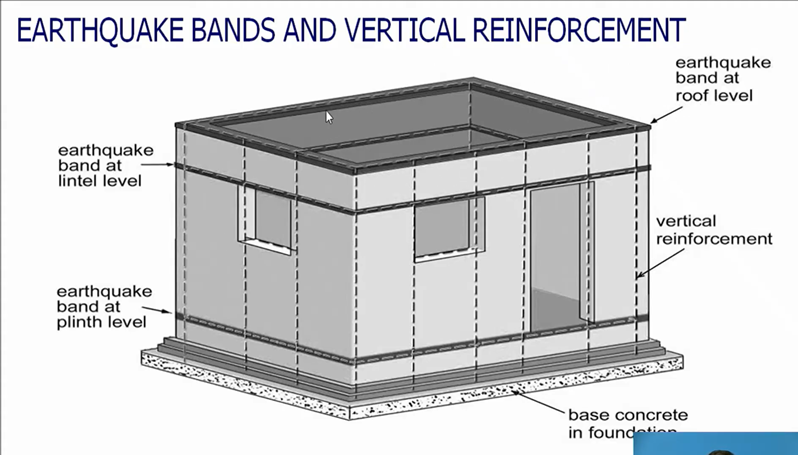
North India, a region prone to seismic activity, demands urgent attention to enhance the seismic safety of load-bearing houses. This blog post delves into the concept of establishing a business model that focuses on providing comprehensive seismic retrofitting services. While exploring retrofitting solutions for load-bearing houses, it is imperative to underscore the significance of extensive research and development to ensure the effectiveness and suitability of these solutions in North India's unique context.

  1. Incorporating FRP Bands/Strips for Vertical Reinforcement:

  • ·       To reinforce vertical elements of load-bearing houses, integrating Fiber Reinforced Polymer (FRP) bands or strips is crucial.
  • ·       This retrofitting technique enhances structural integrity, ductility, and seismic resistance.
  • ·       Optimizing the application and performance of FRP materials necessitates comprehensive research and development.


  1. 2.    Utilizing Shotcrete for Strengthening Walls and Foundations:

  • ·       Implementing shotcrete, a sprayed concrete material, effectively reinforces load-bearing house walls and foundations.
  • ·       Assessing the compatibility and effectiveness of shotcrete in the North Indian context requires extensive research and development.
  • ·       Consider local material availability, climate conditions, and seismic design parameters during the research and development process.


  1. 3    Cost-Effective Steel Bracing for Increased Strength and Stiffness:

  • ·       Steel bracing proves to be a valuable retrofitting technique for enhancing the strength and stiffness of load-bearing house structures.
  • ·       In-depth research and development are necessary to determine the optimal placement and configuration of steel braces.
  • ·       During the research and development phase, factors such as load transfer, connection details, and anchorage requirements should be considered.

  1. 4.Exploring Masonry Reinforcement for Improved Structural Performance:

  • ·       Masonry reinforcement techniques involving the addition of steel bars or wires are worth considering to enhance the strength and ductility of load-bearing houses.
  • ·       Thorough research and development are essential to evaluate the compatibility, cost-effectiveness, and practicality of masonry reinforcement in the North Indian context.
  • ·       Collaboration with experts and local stakeholders can contribute to the development of standardized guidelines for implementing masonry reinforcement techniques.


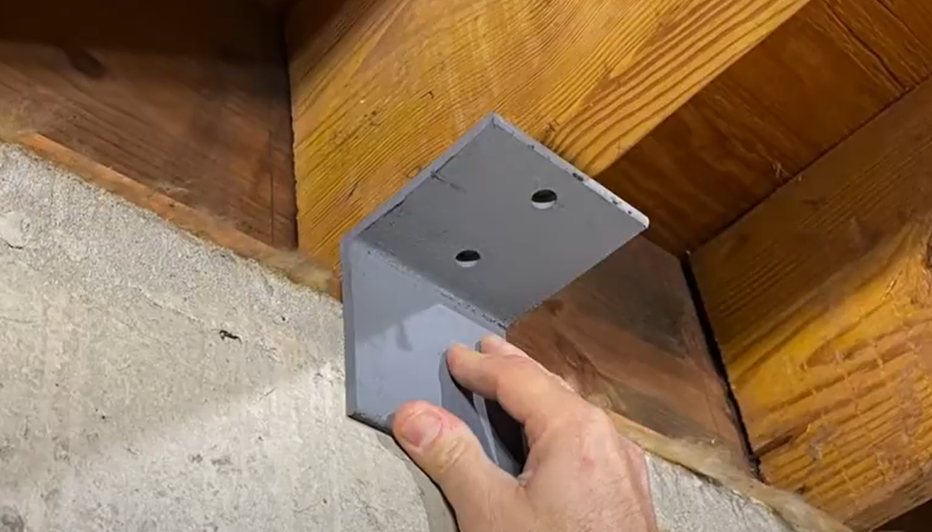
While the presented retrofitting solutions hold promise for strengthening load-bearing houses in North India, extensive research and development is critical before practical implementation.R&D evaluates the feasibility, effectiveness, and long-term performance of retrofitting techniques under specific seismic and environmental conditions prevalent in the region.By tailoring retrofitting solutions to the unique requirements and challenges of North Indian load-bearing houses through thorough R&D, safer and more resilient structures can be achieved.

Establishing a business model for seismic retrofitting services in North India presents an invaluable opportunity to contribute to the safety and resilience of load-bearing houses in the region.By offering a range `of solutions, including FRP bands/strips, shotcrete, steel bracing, and masonry reinforcement, the business can play a vital role in mitigating earthquake risks.However, it is crucial to prioritize extensive research and development to validate the effectiveness and suitability of these solutions in the local context.Combining innovation with rigorous R&D efforts will pave the way for safer and more resilient communities in North India.


Labels: